
Depending on how the balls come at you, you have to make a decision of what stroke you want to use. If you only have one stroke for most situations, you will be a very inconsistent player. Thus your ability to do anything else in a point is shortened and there is no reason to teach anything else past strokes if the student can't keep the ball in the court.
As a matter of fact, when an experienced player says that someone has a good stroke. They are more or less referring to the amount of things the player can do with it. Not how hard it is struck.
From a tactical standpoint. As an opponent, if I notice you beat me up with a certain stroke. All I have to do is figure out the situation you like and STOP that from happening. I get a 2 for 1 if stopping the situation ALSO causes you to make unforced errors.
So when I teach, it is my primary concern is to make you comfortable in receiving shots you don't like. Its great to have a shot you can kill but if you can't set that shot up, whats the point in having it?
To drive my point home, I will use world famous Roger Federer although I could have used any player on the tour....or any of my practice partners for that matter.
Here is Roger's regular forehand. Many people use it as inspiration in their own forehand.
 So that's all you need for a killer forehand...Right? But that only covers the forehand from his waist to his chest. You might want to learn how to deal with them around the shoulders.
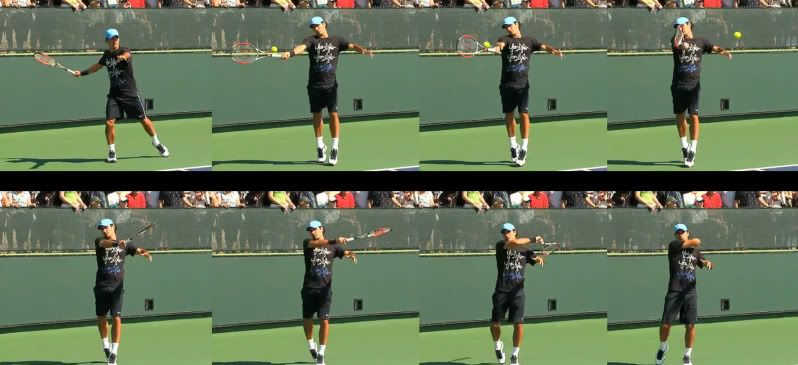 But what if you have a really high bounce and it goes over your head?
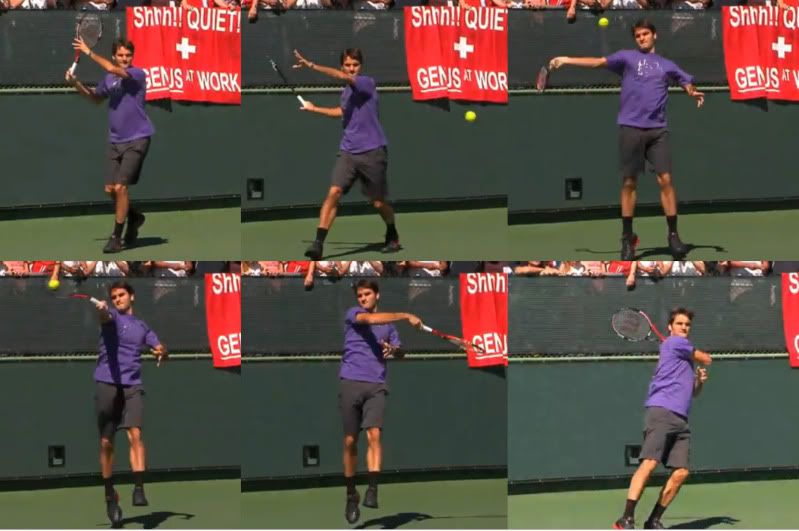 What if you have a low bounce?
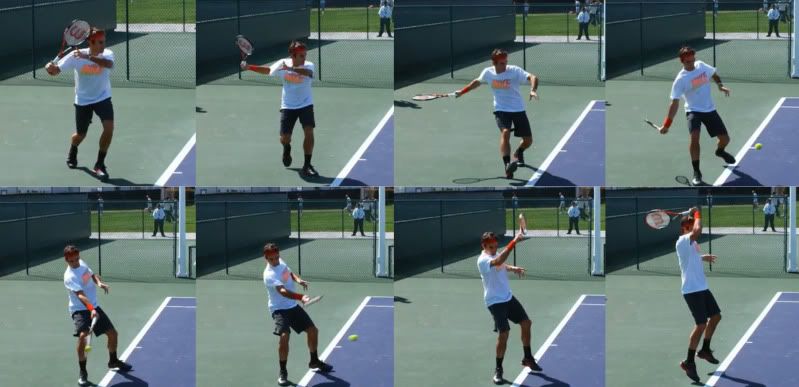 What if you can't reach it with a normal forehand and have to slice?
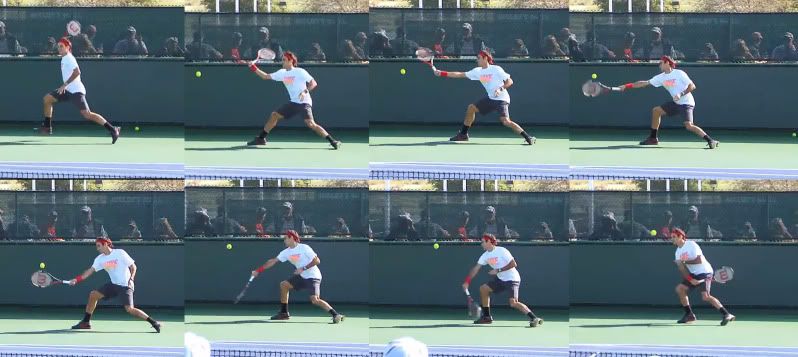 What if you want to come to the net and you need to hit an approach shot?
 What if the ball is low on the approach shot?
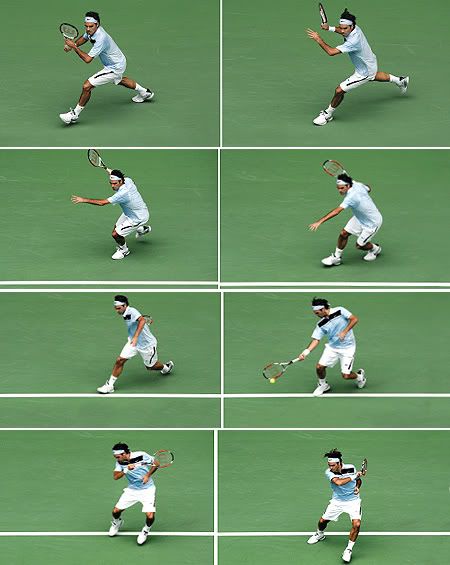 I won't even get started on the different forehand volleys. Or the backhands, or the serve, or the return of serve, or the slice, or specialty shots. And I'm not exaggerating this. Federer is special but all of the shots I listed are shots you will have to learn if you want to progress in this game. The sooner a club player can realize this, the more dangerous he/she becomes. Good luck!


No comments:
Post a Comment